
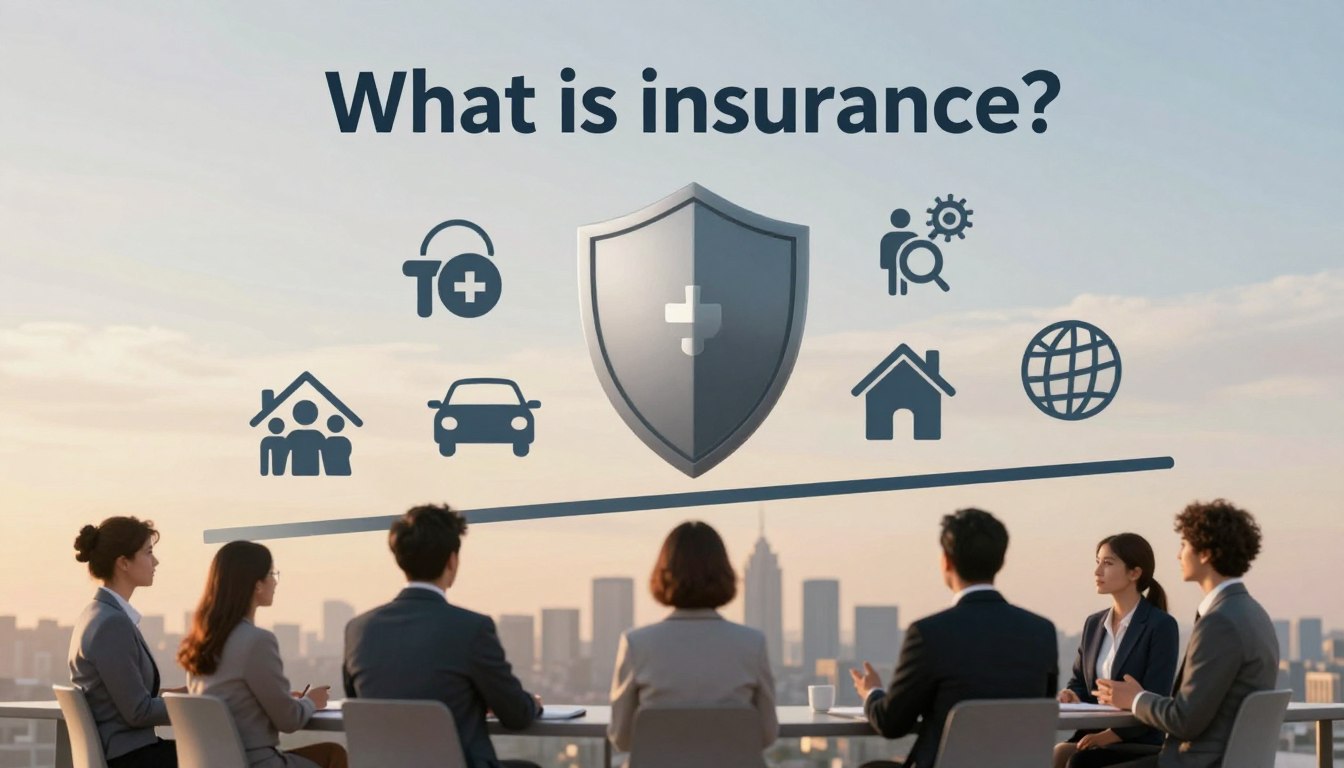
Understanding what is insurance might seem hard, but it’s key to managing risk. At its heart, insurance is a financial safety net. It helps you bounce back from surprises.

You pay a premium to an insurance company. They offer financial help when unexpected things happen, like accidents or natural disasters. This help can cover medical bills, fix or replace damaged stuff, or even support you when times are tough.
Having insurance brings peace of mind. It means you’re ready for life’s surprises. It’s a vital way to protect your money and get back on track after unexpected setbacks.
Key Takeaways
- Insurance provides financial protection against unexpected events.
- You pay a premium to an insurance company for coverage.
- Insurance can help cover medical expenses, property damage, and other costs.
- Having insurance can give you peace of mind and financial security.
- Insurance is an essential tool for managing risk in your life.
What Is Insurance? The Basic Concept
Insurance acts as a safety net against unexpected events. It’s a financial tool that helps protect you from big losses. This way, you can better manage risks.

The Definition and Purpose of Insurance
Insurance is a deal between you and an insurance company. You pay a premium, and they promise to help with certain losses or damages. Its main goal is to lessen financial risks, so you’re not hit hard by surprise costs.
Key parts of an insurance policy are:
- Premium: The cost for insurance coverage
- Deductible: What you pay first before the insurer kicks in
- Coverage Limit: The most the insurer will pay for a loss
| Insurance Type | Purpose | Benefits |
|---|---|---|
| Health Insurance | Covers medical bills | Reduces healthcare costs, gives access to care |
| Life Insurance | Supports loved ones after you’re gone | Guarantees financial stability, covers funeral costs or debts |
| Auto Insurance | Protects against vehicle damage or accidents | Prevents big financial hits from accidents, theft, or damage |
How Insurance Protects Your Financial Future
Insurance shifts risk from you to the insurer. By paying a small premium, you avoid big financial hits from unexpected events. For example, health insurance can handle expensive medical bills, and auto insurance can shield you from accident costs.
Knowing what insurance is and how it works helps you protect your finances wisely.
The History and Evolution of Insurance
Exploring the history of insurance shows how it has grown to meet new needs. It has been around for centuries, starting with early risk-sharing practices. These practices are the base of today’s insurance systems.
Ancient Risk-Sharing Practices
In ancient times, merchants and traders faced many risks. They created early insurance forms to deal with these risks. For example, bottomry contracts were loans to merchants, with the lender taking the risk for a fee. This was the start of marine insurance.

The Birth of Modern Insurance Systems
The modern insurance industry began in the 17th and 18th centuries. The founding of Lloyd’s of London in 1688 was a big step. It became a center for marine and other insurances.
As time went on, insurance companies grew to offer more products. They started to include life, health, and property insurance. This was to meet the changing needs of people and businesses.
How Insurance Actually Works
To really get insurance, you must understand its basics. At its heart, insurance helps manage risks and offers financial safety against surprises.
The Risk Pooling Principle Explained
The core of insurance is the risk pooling idea. It spreads risk among many, so no one person pays for all surprises. This way, insurance companies can help lots of people, making it cheaper for all.
How Premiums Are Calculated
Insurance premiums depend on several things. These include how likely a claim is, the claim’s cost, and the insurance company’s costs. Here’s a quick look at how premiums are figured out:
| Factor | Description | Impact on Premium |
|---|---|---|
| Risk Assessment | Evaluating the likelihood of a claim | Higher risk = Higher premium |
| Claim Cost | Estimated cost of potential claims | Higher cost = Higher premium |
| Administrative Expenses | Operational costs of the insurer | Higher expenses = Higher premium |
The Claims Process Step-by-Step
When you file a claim, it goes through a few steps. First, you tell your insurance about the issue. Then, you send in the needed papers for your claim. The insurance company checks your claim and decides if it’s valid. If it is, you get the agreed payment.

Essential Insurance Terminology You Should Know
To understand insurance, knowing key terms is crucial. These concepts help you make smart choices about your coverage.
Understanding Policies, Premiums, and Deductibles
Insurance policies are agreements between you and the insurance company. Policies explain what’s covered, the rules, and how long it lasts. The premium is what you pay for the policy, often monthly or yearly. A deductible is what you pay first before the insurance kicks in.
What Makes a Good Policy
A great policy covers what you need, is affordable, and has clear terms. Look for policies with fair premiums, easy deductibles, and full coverage.
How to Evaluate Premium Costs
When looking at premiums, think about your risk, the value of what’s insured, and coverage limits. Comparing quotes from different companies can help you find the best deal.
Coverage Limits, Exclusions, and Riders
Coverage limits are the max an insurance company pays for a claim. Exclusions are risks or situations not covered. A rider changes the policy, adding or removing coverage.
| Term | Description | Example |
|---|---|---|
| Coverage Limit | Maximum amount paid for a claim | $100,000 liability coverage |
| Exclusion | Specific risk or circumstance not covered | Pre-existing medical conditions |
| Rider | Amendment to add or remove coverage | Adding flood coverage to a homeowner’s policy |
Types of Personal Insurance Every American Should Consider
Understanding personal insurance is key to protecting your financial future. It shields you from risks and uncertainties. Knowing the different types is crucial.
Health Insurance Options
You have many health insurance choices. These include plans from your employer, individual and family plans, and government programs like Medicare and Medicaid. Choosing the right plan depends on your health needs, budget, and personal circumstances. Think about deductible, copays, and coverage limits when picking a plan.
Life Insurance: Term vs. Permanent
Life insurance protects your loved ones if you pass away. You can pick term life, which covers you for a set time, or permanent life, which lasts forever. Term life is cheaper, but permanent life builds cash value over time.
Auto Insurance Requirements and Options
Auto insurance is a must in most states, with different rules. You should get liability, collision, and comprehensive coverage. Some companies also offer roadside help and rental car coverage.
Protecting Your Home: Homeowners and Renters Insurance
Insurance is vital whether you own or rent a home. Homeowners insurance covers your property and stuff against damage or loss. Renters insurance protects your personal items. Both types offer liability coverage if someone gets hurt on your property.
Business Insurance Essentials
Business insurance is key to protecting your company’s money from unexpected problems. As a business owner, you know many challenges can hit your business. These include damage to property or liability issues. The right insurance can help lessen these risks and keep your business strong.
Commercial Property Protection
Commercial property insurance guards your business stuff, like buildings, gear, and stock, against damage or loss. This is important for quick recovery from problems like fires, storms, or theft. For example, if a fire hits your store, this insurance can help pay for fixes or rebuilding.
Liability Coverage for Business Owners
Liability insurance shields your business from money losses from lawsuits and claims. If your business is sued for damages or injuries, this insurance can help with legal costs and settlements. It’s a key part of your insurance plan, giving you peace of mind and financial safety.
Workers’ Compensation and Employment Practices
Workers’ compensation insurance helps pay for employees’ medical bills and lost wages if they get hurt at work. Employment practices liability insurance (EPLI) also protects your business from claims about how you treat employees. These insurances are vital for a safe and positive work place.
By getting these important insurances, you can shield your business from many risks. This helps ensure your business does well for a long time. Always check your insurance needs to keep your business safe.
Specialized Insurance Products for Specific Needs
Insurance isn’t just about general coverage; there are specialized products for particular situations. These niche insurance products are designed to address unique needs and circumstances that standard policies may not cover.
Travel Insurance Benefits
Travel insurance is a vital consideration for anyone embarking on a trip, whether domestically or internationally. It provides coverage for unexpected events such as trip cancellations, medical emergencies, and lost luggage. With travel insurance, you can enjoy your travels with greater peace of mind, knowing you’re protected against unforeseen circumstances.
Pet Insurance Considerations
Pet insurance is another specialized product gaining popularity among pet owners. It helps cover veterinary costs in case your pet falls ill or is injured. When considering pet insurance, it’s essential to evaluate the coverage options, deductibles, and premiums to ensure it fits your budget and meets your pet’s needs.
Disability and Long-Term Care Insurance
Disability and long-term care insurance are crucial for protecting your financial future in case you’re unable to work due to illness or injury. Disability insurance replaces a portion of your income, while long-term care insurance covers costs associated with long-term care, such as nursing home fees or in-home care. These insurances provide financial security and peace of mind for you and your loved ones.
Smart Strategies for Choosing the Right Insurance
Choosing the right insurance is more than just picking a policy. It’s about understanding what you need. It’s important to have a strategy that fits your life.
Assessing Your Personal Risk Profile
Knowing your risk profile is key to picking the right insurance. Think about your lifestyle, what you own, and your money situation. For example, if you have a family, you might want life insurance to secure their future.
Comparing Policies and Providers Effectively
After figuring out your risk, it’s time to compare policies. Look for good coverage at a fair price. As Consumer Reports advises, “Shopping around and asking questions can save you money and find the best deal.”
“The key to finding the right insurance is to shop around and not be afraid to ask questions.”
Understanding the Fine Print Before You Sign
Before you sign, read the fine print carefully. Check the coverage limits, what’s not covered, and deductibles. Remember, “the devil is in the details.” Knowing what’s included and what’s not helps avoid surprises later.
By using these smart strategies, you can make a wise choice about your insurance. This way, you’ll get the right coverage for your needs.
Insurance Regulations and Consumer Protections
Insurance rules are key to protecting people and keeping the industry fair. Knowing these rules helps you choose the right insurance for you.
State vs. Federal Insurance Oversight
In the U.S., states mainly control insurance. Each state has its own department to watch over insurance companies. But, the federal government also has rules, especially for health and flood insurance.
Key aspects of state regulation include:
- Licensing insurance companies and agents
- Reviewing policy forms and rates
- Handling consumer complaints
Your Rights as an Insurance Consumer
You have rights as an insurance customer. These include fair treatment, privacy, and clear policy info. The National Association of Insurance Commissioners says, “Consumers have the right to be treated fairly and honestly by insurers and their representatives.”
“Consumers have the right to be treated fairly and honestly by insurers and their representatives.” – National Association of Insurance Commissioners
Knowing these rights helps you deal with any insurance problems.
Money-Saving Tips for Insurance Buyers
As an insurance buyer, you’re looking for ways to save money. Insurance can be expensive, but there are ways to lower your premiums. By understanding the insurance market, you can protect your finances and save money.
Bundling Policies for Discounts
One way to save is by bundling policies with the same provider. Many companies offer discounts for customers with multiple policies. For example, combining auto and home insurance can save you a lot of money.
Raising Deductibles Strategically
Raising your deductibles can lower your premiums. But, make sure you can afford the higher deductible if you need to make a claim. It’s important to have enough savings for this.
Annual Insurance Audits and When to Switch Providers
Reviewing your insurance policies every year can help you save money. Compare your current policies with what’s available in the market. If you find a better deal, it might be time to switch providers. Loyalty doesn’t always mean the best deal in insurance.
| Insurance Type | Potential Savings | Action Required |
|---|---|---|
| Auto Insurance | Up to 20% | Bundling with Home Insurance |
| Home Insurance | Up to 15% | Increasing Deductible |
| Health Insurance | Varies | Annual Policy Review |
Conclusion: Why Insurance Matters for Your Financial Security
Understanding what insurance is can be key to securing your financial future. It’s like a protective shield against life’s surprises. It gives you financial help when you least expect it.
In this article, we’ve covered the basics of insurance. We talked about its history, types, and products. Now, you know how insurance works and why it’s important for managing risks.
Insurance is more than just a safety net. It’s a smart move towards planning your finances. By picking the right policies, you can safeguard your assets. You can also ensure your family’s safety and keep your finances stable, even when things get tough.
As you plan ahead, think carefully about your insurance needs. Make sure your policies still fit your life. With the right insurance, you can look forward to the future with confidence. You’ll be ready for whatever life brings.
FAQ
What is insurance, and how does it work?
What are the different types of insurance available?
How do I choose the right insurance policy for my needs?
What is the purpose of insurance premiums, and how are they calculated?
How do I file an insurance claim, and what is the process?
What are some common insurance terminology I should know?
Can I bundle multiple insurance policies, and what are the benefits?
How often should I review my insurance coverage?
What are my rights as an insurance consumer?
How can I save money on my insurance premiums?